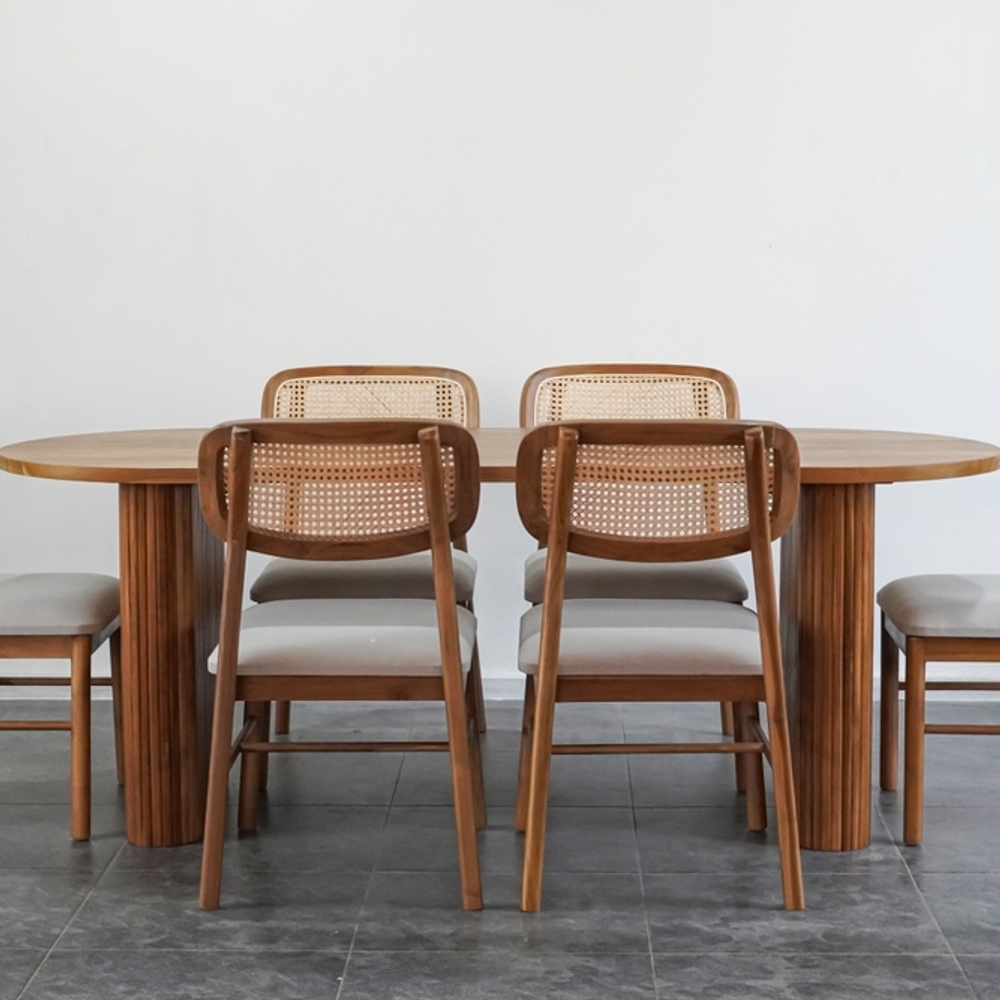
The dining table is the hardest-working piece of furniture in your house. It’s where you host holiday feasts, where your kids do their homework, and where you sort out your taxes. It’s a workstation, a craft station, and a conversation station.
The dining table is the hardest-working piece of furniture in your house. It’s where you host holiday feasts, where your kids do their homework, and where you sort out your taxes. It’s a workstation, a craft station, and a conversation station.
Because it serves so many purposes, buying the wrong one is a painful mistake. A table that’s too big chokes the room; one that’s too fragile will be ruined by a stray coffee cup.
Before you fall in love with a showroom setup, here is the essential checklist to ensure your new table fits your home and your lifestyle.
1. The Golden Rule of Spacing
The most common mistake buyers make is misjudging scale. A table might look small in a warehouse-sized furniture store but massive in your dining room.
The 90cm (3 Foot) Rule: You need a minimum of 90cm (36 inches) of clearance between the edge of the table and the nearest wall (or piece of furniture). This allows enough room for a guest to pull their chair out and sit down without feeling trapped. If you have a walkway behind the chairs, aim for 120cm.
- Pro Tip: Use masking tape or bed sheets to map out the table's footprint on your floor before you buy. This helps you visualise how much "walking room" you actually have.
2. Shape Shifting: Which Geometry Works?
The shape of your table should mirror the shape of your room.
- Rectangular: The classic choice for formal dining rooms. It’s best for seating large groups (6+ people).
- Round: The hero of small spaces and square rooms. Round tables have a smaller footprint and no sharp corners to bump into. Plus, they are better for conversation—everyone can see everyone else.
- Oval: Similar to rectangular but visually "lighter." The curved edges make it easier to navigate around the room, making it a great choice for narrow spaces.
- Square: Perfect for square rooms and intimate dining for four people.
3. Material Matters: Durability vs. Style
Your lifestyle dictates your material. Do you have toddlers with crayons? Or is this a "adults-only" zone?
- Solid Wood: The gold standard. It is durable, repairable (you can sand out scratches), and develops a beautiful patina over time. However, it reacts to heat and moisture, so coasters are mandatory.
- Glass: Excellent for dark or small rooms. Because light passes through it, a glass table doesn't visually "block" the space. Just be prepared to wipe away fingerprints daily.
- Ceramic/Sintered Stone: The modern favorite. It mimics the look of marble but is non-porous, heat-resistant, and scratch-proof. You can spill red wine on it or put a hot pan down without panic.
- Marble: Stunning but high-maintenance. Real marble is soft and porous; it stains and etches easily. It requires regular sealing and careful use.
4. The Leg Check (Don’t Forget Your Knees)
Before buying, sit at the table.
- Four Legs: The standard setup. It’s stable, but the corner legs can limit how many people you can squeeze in.
- Pedestal (Center Base): A single central support. This is ideal for small spaces because it allows for more legroom and makes it easy to pull up extra chairs without anyone straddling a table leg.
- Trestle: A support beam connecting two end legs. It creates a grand, farmhouse look but can limit legroom for people sitting at the "heads" of the table.
The Bottom Line
Your dining table is an investment piece intended to last for a decade or more. Prioritise space over style. A beautiful table that nobody can walk around is just an expensive obstacle. Measure your room, measure your doorway (to ensure it fits in the house!), and choose a material that can handle your reality.
Written by
DS Living Team